
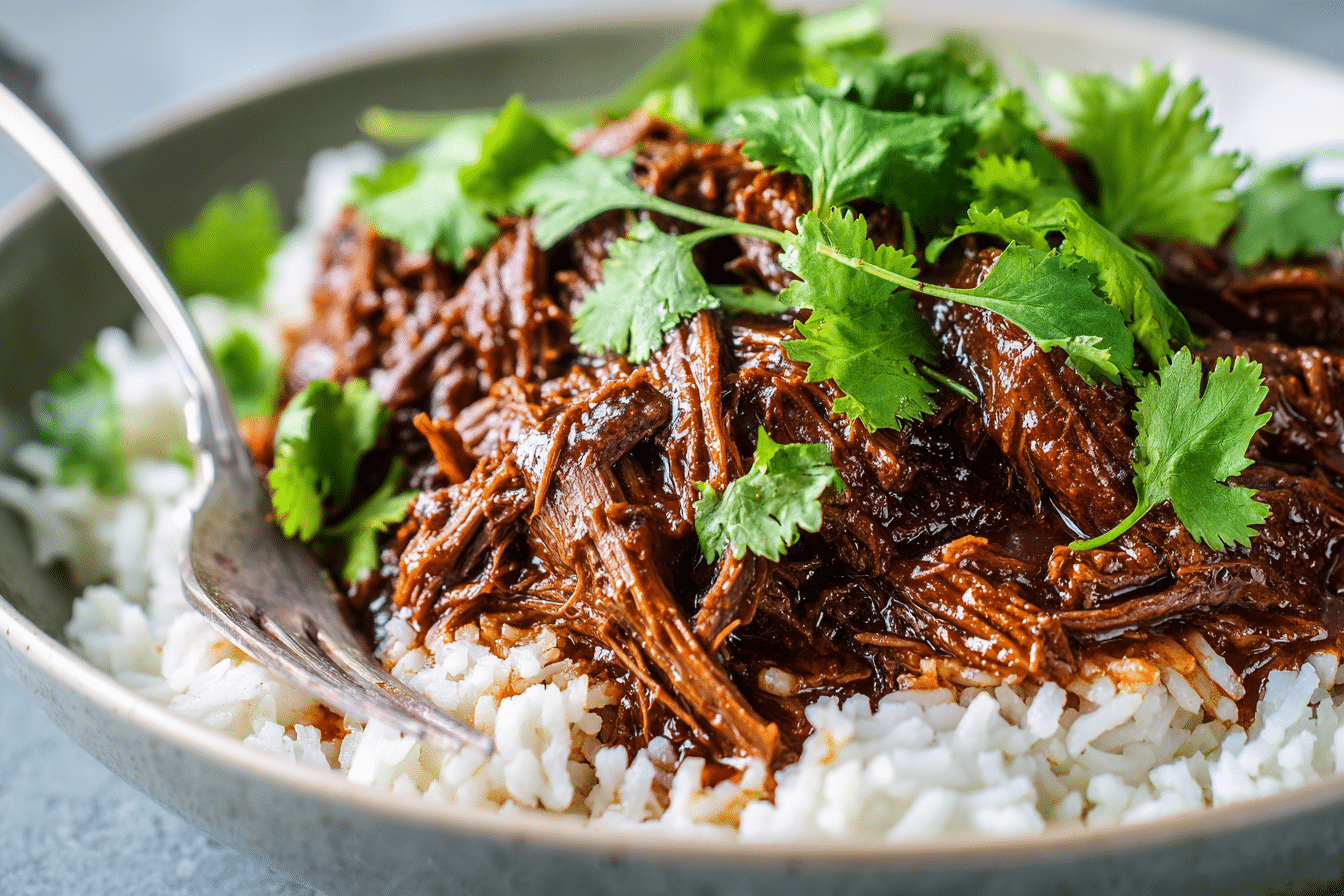
This Korean Pot Roast is the ultimate fusion of slow-cooked comfort and bold, savory Korean flavors. It transforms a humble chuck roast into a meltingly tender, flavor-loaded centerpiece that’s hard to stop making—and even harder to stop eating.
Inspired by the rich depth of traditional Korean marinades, this dish features soy sauce, garlic, ginger, sesame oil, and a touch of gochujang to create a glossy, sticky glaze that seeps into every fiber of the meat. Slow-roasted until fork-tender, the beef falls apart in savory, spicy-sweet shreds that beg to be piled over steamed rice, tucked into lettuce wraps, or eaten straight from the pan.
It’s cozy, comforting, and just exotic enough to feel special, but made with easy-to-find ingredients. Whether you’re feeding a crowd, meal-prepping for the week, or just in the mood for something wildly satisfying, this Korean Pot Roast hits every note of sweet, salty, savory, and spicy in one addictive bite.
Ingredients Overview
This dish comes together with a balance of pantry staples and Korean condiments that bring out deep umami and complexity.
Chuck Roast
Choose a well-marbled 3–4 lb beef chuck roast. This cut becomes beautifully tender after slow roasting and holds up to bold marinades.
Soy Sauce
Forms the salty, umami base of the marinade. Use low-sodium if desired for more control over saltiness.
Gochujang (Korean Chili Paste)
This fermented chili paste brings a gentle heat and deep, slightly sweet flavor that defines the dish. It’s not overly spicy but adds incredible depth.
Brown Sugar or Honey
Balances the spice with subtle sweetness. Brown sugar offers a molasses note, while honey adds a floral touch and glossy finish.
Sesame Oil
Adds a nutty, toasty aroma that’s essential to Korean-style dishes. A little goes a long way.
Garlic and Ginger
Grated fresh garlic and ginger infuse the roast with warmth, bite, and authenticity. Fresh is best, but paste or frozen cubes work too.
Rice Vinegar or Mirin
Provides mild acidity that balances the richness of the meat and sauce.
Beef Broth
Keeps the meat moist while roasting and adds savory body to the cooking liquid.
Scallions and Sesame Seeds
Used for garnish, these add freshness and crunch to the final dish.
Substitutions
-
Use brisket or short ribs instead of chuck roast.
-
Replace gochujang with sambal oelek or chili garlic sauce for a similar heat.
-
Maple syrup or coconut sugar can replace brown sugar or honey.
Step-by-Step Instructions
-
Preheat the Oven
Preheat your oven to 325°F (165°C). You’ll need a large Dutch oven or deep oven-safe pot with a lid. -
Make the Korean Marinade
In a bowl, mix:-
½ cup soy sauce
-
3 tbsp gochujang
-
¼ cup brown sugar or honey
-
1 tbsp sesame oil
-
5 cloves garlic, minced
-
1 tbsp grated fresh ginger
-
2 tbsp rice vinegar or mirin
-
¾ cup beef broth
-
-
Sear the Roast (Optional but Recommended)
Heat 1 tbsp oil in the Dutch oven over medium-high heat. Sear the roast for 3–4 minutes per side until browned. Remove and set aside. -
Combine and Cook
Return the seared roast to the pot. Pour the marinade over the meat, turning to coat. Cover with lid. -
Slow Roast
Roast in the oven for 3.5 to 4 hours, basting every hour. The meat should be fork-tender and easily shreddable. -
Shred and Reduce Sauce
Remove roast and shred with two forks. Simmer the remaining liquid on the stovetop until thickened slightly, about 5–10 minutes. Return meat to the pot and toss in the sauce. -
Garnish and Serve
Top with sliced scallions and sesame seeds. Serve hot.
Common Mistakes to Avoid:
-
Don’t skip searing—it adds depth and seals in flavor.
-
Avoid high heat cooking, which can dry out the meat.
-
Don’t forget to taste the sauce and adjust for sweetness or heat before serving.
Tips, Variations & Substitutions
Tips:
-
Marinate the roast overnight for even deeper flavor.
-
Use a meat thermometer to ensure the roast hits around 195–205°F for perfect shredding.
-
Deglaze the pot with a splash of broth or mirin after searing for more flavor.
Variations:
-
Add carrots or daikon in the last hour of roasting for a veggie boost.
-
Stir in kimchi at the end for a tangy punch.
-
Make it spicier by adding gochugaru (Korean chili flakes) or extra gochujang.
Substitutions:
-
Swap beef for pork shoulder or chicken thighs for a different protein.
-
For a gluten-free version, use tamari instead of soy sauce and check your gochujang label.
Serving Ideas & Occasions
Serve With:
-
Steamed white rice, jasmine rice, or sticky rice
-
Lettuce wraps with rice and quick pickles
-
Noodles or ramen with broth
-
Cucumber salad or kimchi for contrast
Occasions:
Great for Sunday dinners, casual entertaining, or make-ahead weeknight meals. The leftovers are excellent for rice bowls, sandwiches, or tacos.
Serve with cold beer, ginger tea, or sparkling water with lime for balance.
Make it your go-to when you want slow-cooked comfort with an unexpected kick of flavor.
Nutritional & Health Notes
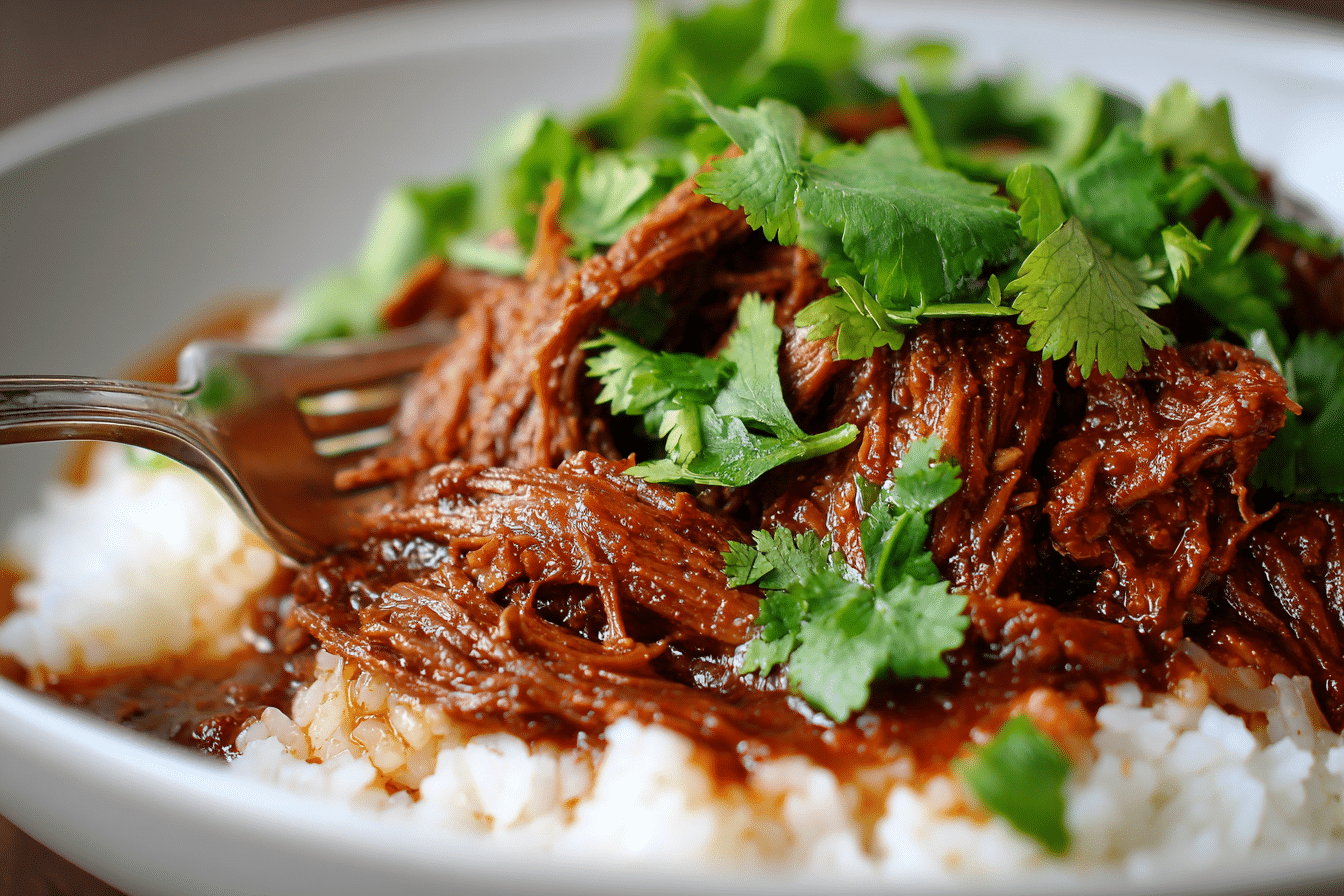
Korean Pot Roast is high in protein and deeply satisfying, especially when served with balanced sides.
Rich in Protein and Iron:
Chuck roast provides iron and B vitamins, important for energy and metabolism.
Bold Flavor, Big Satisfaction:
A small serving packs intense flavor, which means you don’t need huge portions to feel full.
Healthier Tweaks:
-
Trim excess fat from the beef before cooking.
-
Use low-sodium soy sauce and reduce sugar slightly to lighten the dish.
-
Pair with fresh vegetables to create a more balanced plate.
This dish delivers powerful flavor without deep frying or processed ingredients—just real food and time.
FAQs
1. Can I make Korean Pot Roast in the slow cooker?
Yes. Sear the roast first, then cook on LOW for 8 hours or HIGH for 4–5 hours. Finish by reducing the sauce in a pan before shredding the meat.
2. Can I use a different cut of beef?
Brisket, short ribs, or even pork shoulder work well. Just adjust cook time based on thickness and fat content.
3. How spicy is it?
Mild to medium, depending on your gochujang. You can control heat by adding more or less chili paste or mixing in honey to mellow it.
4. Can I freeze leftovers?
Absolutely. Shredded beef freezes well in an airtight container for up to 2 months. Thaw overnight and reheat in a skillet with a splash of broth.
5. What’s the best way to shred the meat?
Use two forks while it’s still hot. If it’s fully tender, the meat will fall apart easily. You can also use a stand mixer with the paddle attachment for faster shredding.
6. Do I have to baste during cooking?
It’s helpful but not essential. Basting ensures more even flavor and moisture. If you skip it, just stir the beef into the sauce at the end.
7. Can I make this dish ahead of time?
Yes. It tastes even better the next day. Store in the fridge for up to 4 days and reheat gently on the stove or in the oven.
TASTY CARD (PLAIN TEXT – COPY/PASTE READY)
Description:
A tender, slow-roasted beef pot roast infused with bold Korean flavors from gochujang, garlic, soy, and sesame.
Ingredients:
3–4 lb chuck roast
½ cup soy sauce
3 tbsp gochujang (Korean chili paste)
¼ cup brown sugar or honey
1 tbsp sesame oil
5 garlic cloves, minced
1 tbsp fresh ginger, grated
2 tbsp rice vinegar or mirin
¾ cup beef broth
1 tbsp oil (for searing)
Scallions and sesame seeds, for garnish
Instructions:
-
Preheat oven to 325°F.
-
Mix soy sauce, gochujang, brown sugar, sesame oil, garlic, ginger, vinegar, and broth in a bowl.
-
Sear beef in oil on all sides until browned.
-
Place in Dutch oven, pour marinade over, and cover.
-
Roast for 3.5 to 4 hours, basting occasionally.
-
Shred beef, reduce sauce if needed, and return meat to pot.
-
Garnish and serve over rice or in wraps.
Notes:
Can be made in slow cooker. Adjust heat level by modifying gochujang. Leftovers freeze well.
Prep Time: 20 minutes
Cook Time: 4 hours
Total Time: 4 hours 20 minutes
Yield: 6–8 servings
Calories: 480 per serving
Course: Main Dish
Cuisine: Korean-Inspired Fusion